How Gallery Walks Work…in ANY Class!
So, you planned a gallery walk. You posted tasks around the room. Your students are moving and talking, but you’re not sure they’re learning anything.
Here’s how to turn your gallery walk into a high-impact instructional routine that works in any classroom, for any standard.
Why Gallery Walks Matter
When used with structure and purpose, gallery walks:
- Build student ownership
- Create movement and engagement
- Surface multiple perspectives
- Promote feedback and revision
But without structure? You get noise instead of knowledge.
Here’s How Gallery Walks Work for ANY Class
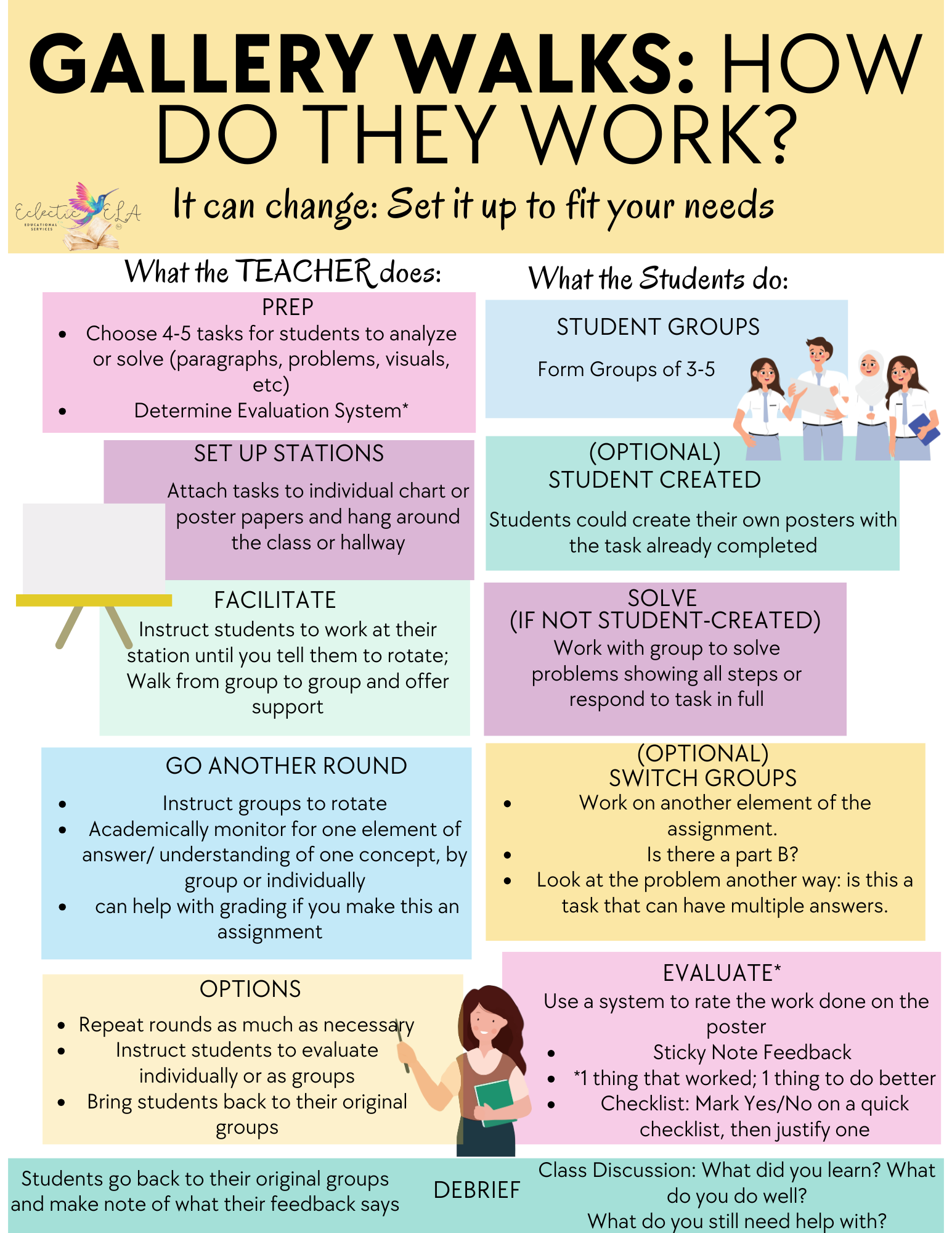
So How do They Work (in Any Content Area)
Step 1: Prep Work
- Choose 4-5 tasks for students to analyze or solve (paragraphs, problems, visuals, etc)
- Determine Evaluation System
- Remember: Evaluating means: How well did they do the work? So there should be feedback that speaks to that. Use encouragement for things that were done correctly and constructive ways to fix things that didn’t go so well. Make sure to offer suggestions or sentence frames, and keep it positive.
- Use sticky notes or write directly on the chart paper
- If you plan to use this as a grade have evaluators sign their names or initials with their feedback
Step 2: Set Up 4–5 Content Stations and Create Groups
Each station should include:
- Attach tasks to individual chart or poster papers and hang around the class or hallway
- Make sure there’s room for student responses
Step 3: Rotate With a Purpose
Each group reads, discusses, and responds using a visible format (writing, drawing, solving, posting). You can have groups rotate a set number of times, or let individuals go check out a set number of posters in a given amount of time.
Step 4: Evaluate
These are some ways students can evaluate the work as they rotate:
- Add One, Fix One: Add a new idea and revise a weak spot
- Highlight & Comment: Mark best evidence or clearest explanation
- Checklist + Why: Mark Yes/No on a quick checklist, then justify one
- Target the Standard: Rate as Bullseye / Close / Off-Target with a brief explanation
Step 5: Debrief
Students go back to their original groups and make note of what their feedback says. Have a class discussion on how the work can be improved based on the feedback? What things are the students doing well? Where is there room for growth? Address student questions, etc.
How Gallery Walks Work…in ANY Class!
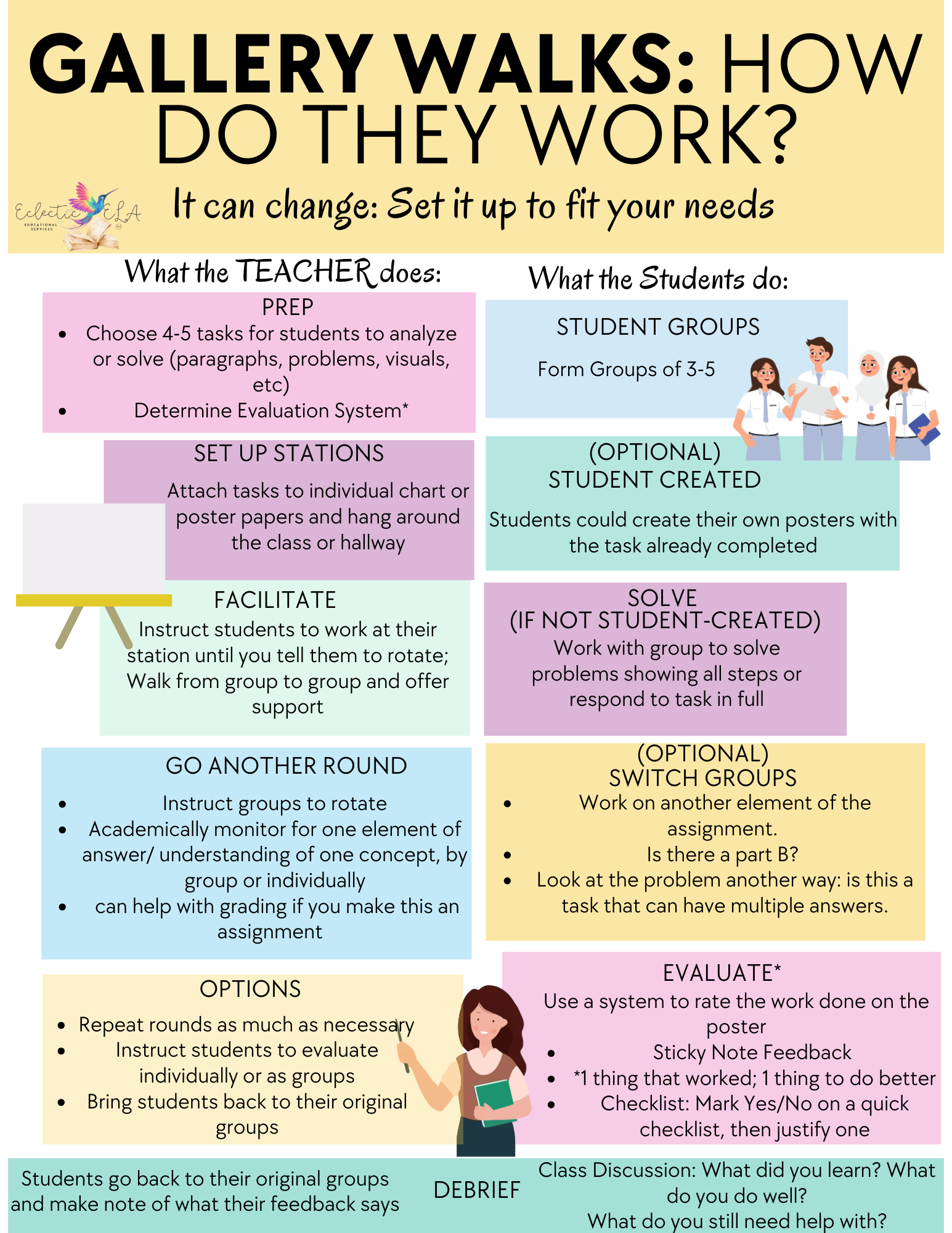
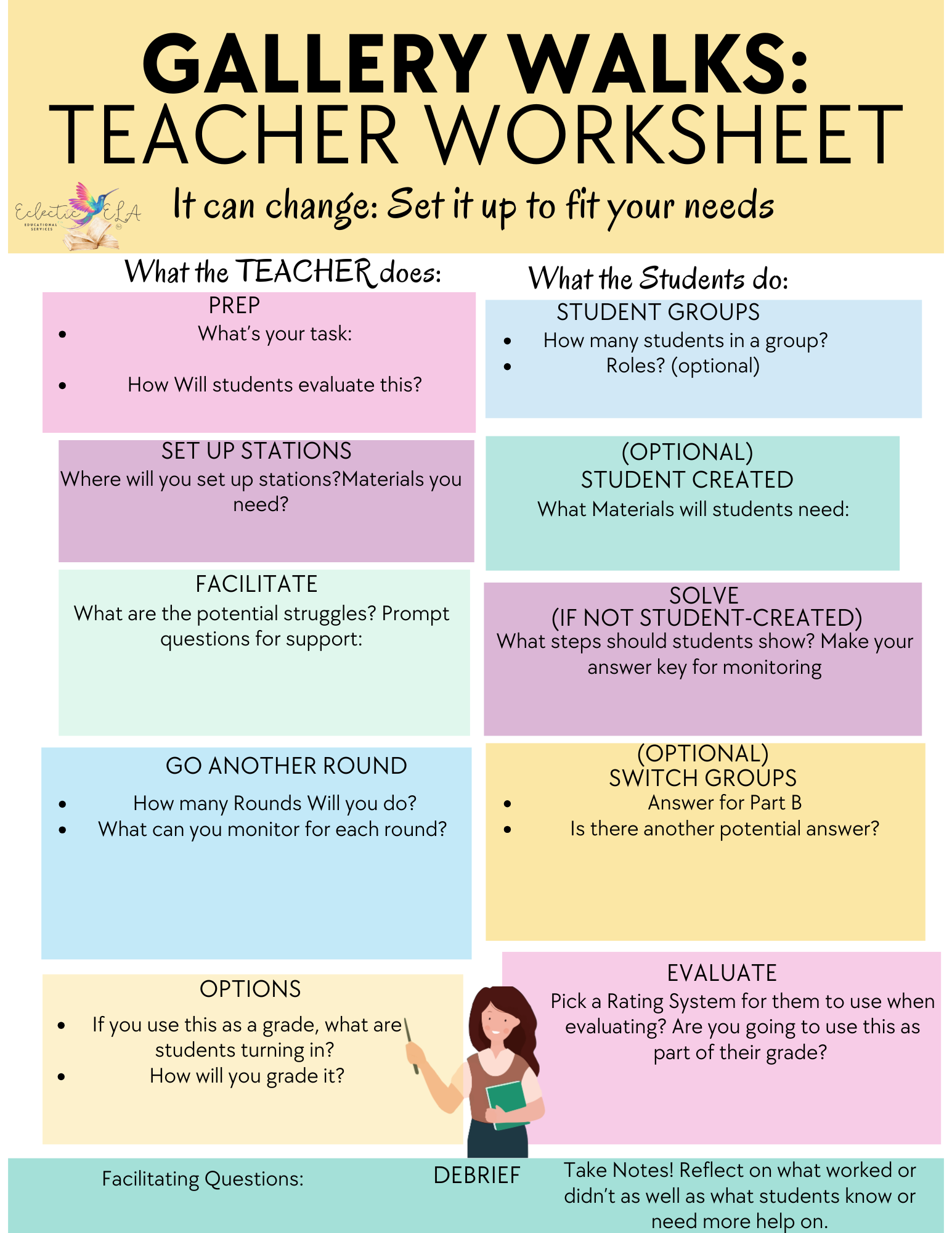
Here’s a copy of the Gallery Walk Guide from above, AND a Teacher Planning Sheet you can download. Use them to plan your own gallery walk this week!
I want to hear how this has worked for you!
Learn how to use gallery walks across subjects to build engagement and student accountability. Includes structured peer review tools and a free teacher checklist.